
Dogs in Pool: Effortless Pet Safety & Care
March 6, 2026Total Alkalinity: Essential for Optimal Pool Water
March 10, 2026
- What is Pool Water Chemistry and Why Does It Matter So Much?
- Mastering Your Pool's Water Chemistry: Key Parameters
- The Tools of the Trade: Testing Your Pool Water
- Understanding and Using Pool Chemicals Safely
- When to Call the Professionals
- Conclusion
Water Chemistry is the invisible force behind every sparkling, inviting swimming pool. Far more than just adding chlorine, understanding and balancing your pool’s water chemistry is an essential guide to ensuring not only crystal-clear water but also the health and comfort of swimmers, and the longevity of your pool equipment. Neglecting this crucial aspect can lead to a host of problems, from irritating eyes and skin to corrosive damage and unsightly algae blooms, transforming your backyard oasis into a perpetual headache.
What is Pool Water Chemistry and Why Does It Matter So Much?
At its core, pool water chemistry refers to the balance of various chemical compounds dissolved in your pool’s water. This balance dictates everything from the effectiveness of your sanitizers to the potential for scaling or corrosion. A properly balanced pool minimizes the need for drastic problem-solving, creating a more consistent and enjoyable swimming experience. Without careful management, even the most advanced filtration system can’t prevent issues like pathogens, cloudy water, or equipment degradation. It’s the foundation of effective pool maintenance and the secret to a truly flawless swimming environment.
Mastering Your Pool’s Water Chemistry: Key Parameters
To achieve ideal water conditions, you need to understand and regularly test several key parameters. Each plays a vital role in the overall health of your pool:
1. Sanitizer Levels (Chlorine is King)
Chlorine is the most common and effective sanitizer, responsible for killing bacteria, viruses, and algae.
Free Chlorine (FC): This is the active chlorine available to sanitize your pool. Ideal range: 1-3 ppm (parts per million).
Combined Chlorine (CC): Also known as chloramines, these are spent chlorine molecules that have reacted with contaminants. High CC levels (>0.5 ppm) indicate your chlorine is working hard but becoming less effective, often causing strong “chlorine” odors and eye irritation. A shock treatment can eliminate chloramines.
2. pH Level: The Balance of Acidity and Alkalinity
The pH level indicates how acidic or alkaline your water is. It’s arguably the most critical parameter after sanitizer.
Ideal Range: 7.4-7.6 (some extend to 7.2-7.8).
High pH (>7.8): Reduces chlorine effectiveness, causes scaling on surfaces and equipment, and can lead to cloudy water and eye irritation.
Low pH (<7.2): Makes water acidic, causing corrosion of equipment (heaters, pumps, ladders), etching of plaster, and rapid dissipation of chlorine, leading to discomfort for swimmers.
3. Total Alkalinity (TA): Your pH Buffer
Total Alkalinity acts as a buffer, preventing sudden fluctuations in your pH level. Think of it as pH’s bodyguard.
Ideal Range: 80-120 ppm.
Low TA: Leads to “pH bounce,” where pH is difficult to stabilize, making it prone to sudden drops or spikes.
High TA: Makes pH difficult to adjust downwards and can contribute to cloudy water and scaling.
4. Calcium Hardness (CH): Protecting Your Pool Surfaces
Calcium Hardness measures the amount of dissolved calcium in your water. It’s crucial for protecting your pool’s surfaces and equipment from damage.
Ideal Range: 200-400 ppm (fiberglass pools can tolerate slightly lower, plaster higher).
Low CH: Water becomes “hungry” for calcium and will aggressively leach it from plaster, grout, and even metal equipment, causing etching and corrosion.
High CH: Leads to scaling (white, crusty deposits) on surfaces, equipment, and in pipes, especially problematic with high pH.
5. Cyanuric Acid (CYA): The Chlorine Stabilizer
Cyanuric Acid acts as “sunscreen” for your chlorine, protecting it from degradation by UV rays.
Ideal Range: 30-50 ppm for outdoor pools (up to 80 ppm in very sunny climates or commercial pools). Indoor pools generally don’t need CYA.
Low CYA: Chlorine gets burned off rapidly by the sun, leading to frequent additions and ineffective sanitization.
High CYA: Too much CYA can “over-stabilize” chlorine, making it less effective at sanitizing, regardless of the free chlorine reading. This often requires partial draining and refilling.
The Tools of the Trade: Testing Your Pool Water
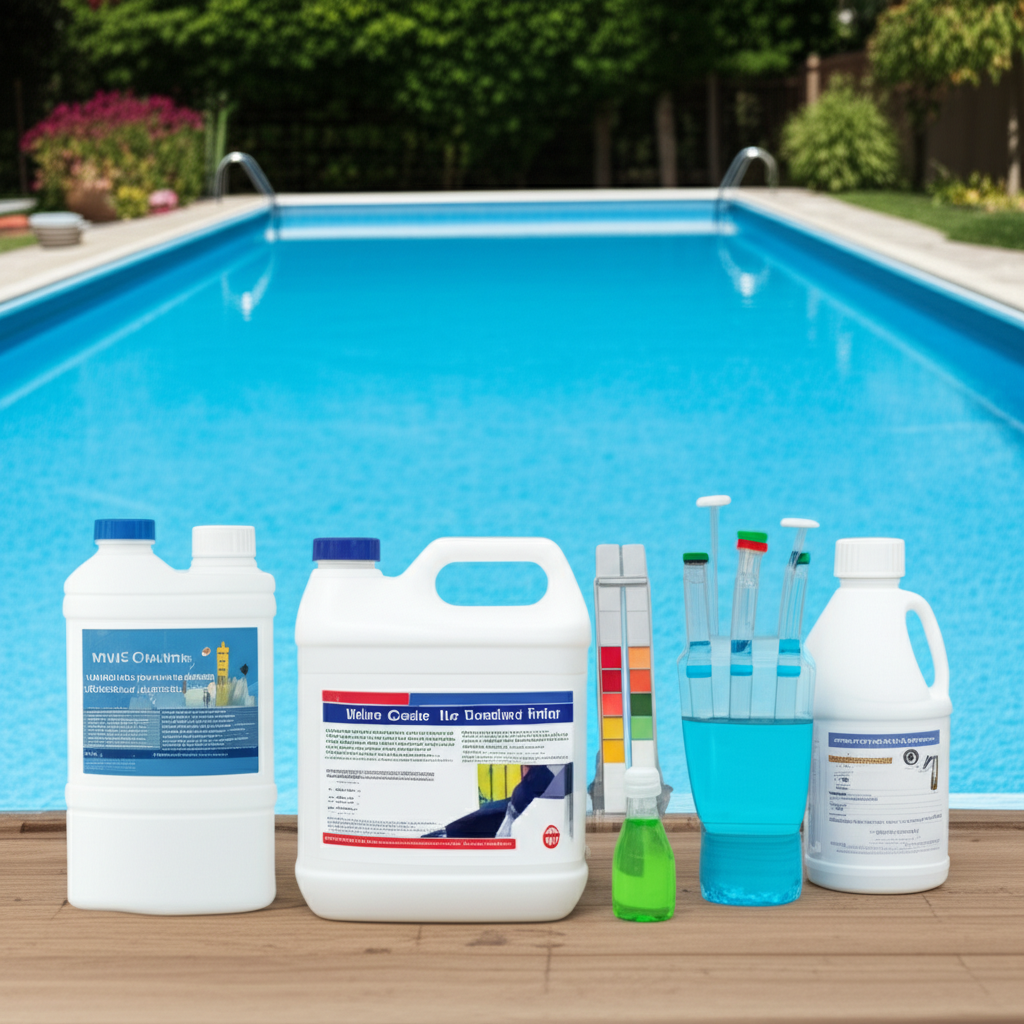
Regular testing is the backbone of good water chemistry. You can choose from several reliable methods:
Test Strips: Convenient and quick, great for daily checks. Dip and compare colors.
Liquid Test Kits: More accurate and comprehensive, using reagents for colorimetric analysis. The Taylor K-2005 or K-2006 are industry standards.
Digital Testers: Offer precise readings for individual parameters but can be more expensive.
Test your pool water at least 2-3 times a week, and even more frequently during heavy use, after rain, or during extreme weather.
Understanding and Using Pool Chemicals Safely
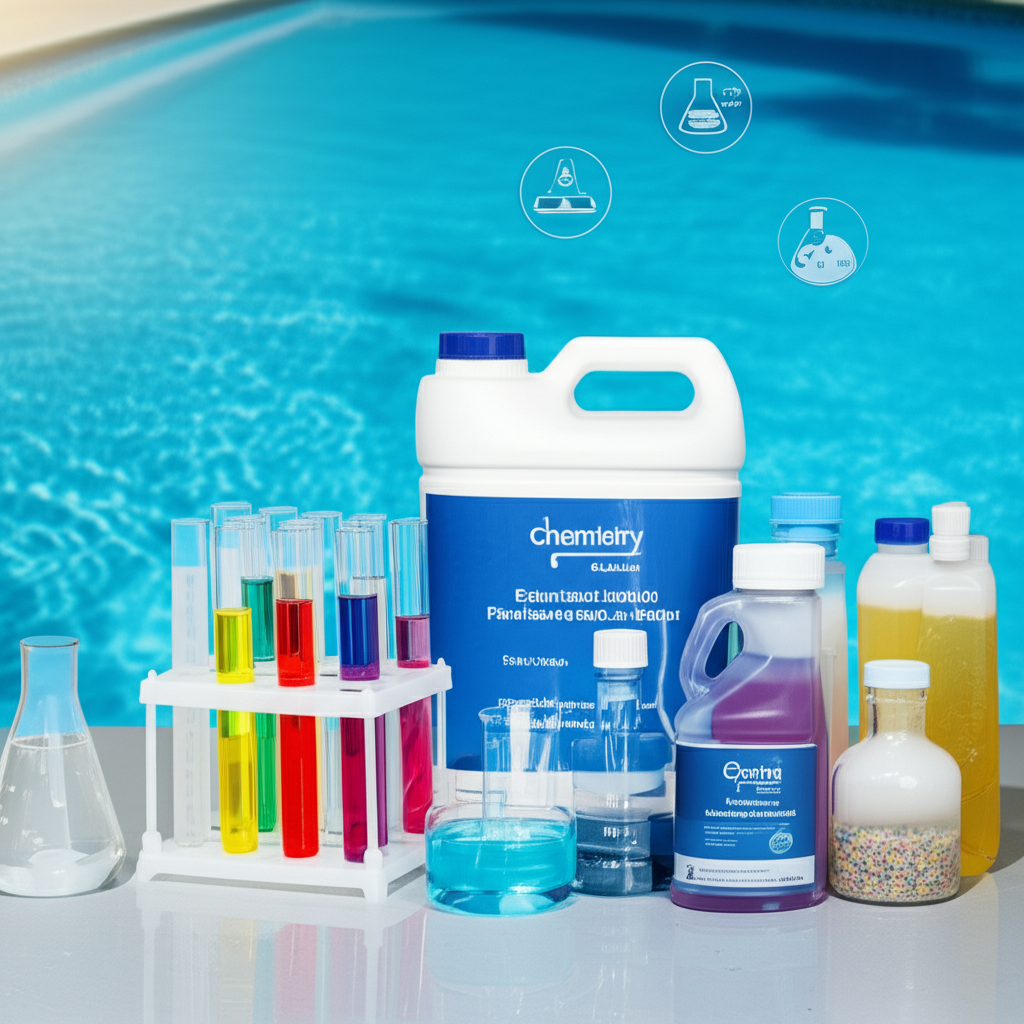
Maintaining optimal water chemistry requires the careful addition of various pool chemicals. These include:
Sanitizers: Chlorine (liquid, granular, tabs)
pH Adjusters: Muriatic acid or dry acid (to lower pH), Soda Ash (to raise pH)
Alkalinity Increaser: Sodium Bicarbonate
Calcium Hardness Increaser: Calcium Chloride
Stabilizer: Cyanuric Acid
* Specialty Chemicals: Algaecides, clarifiers, flocculants, phosphate removers, metal sequestrants.
Always follow manufacturer instructions for dosing and safely handling chemicals. Wear appropriate protective gear, add chemicals slowly to the water (never water to chemicals), and store them in a cool, dry, well-ventilated area away from direct sunlight and incompatible substances. If you’re unsure about chemical handling or dosing, seeking expert pool care can save you time and potential hazards.
When to Call the Professionals
While DIY pool chemistry is achievable for many, there are times when professional assistance is invaluable. If you’re struggling with persistent water chemistry problems, unexplained imbalances, severe algae blooms, or simply lack the time and expertise, don’t hesitate to reach out. Professional pool cleaning services can conduct advanced testing, apply precise chemical treatments, and offer invaluable advice to restore and maintain your pool’s pristine condition. Their expertise ensures that all aspects of your pool’s health are managed effectively, giving you peace of mind and more time to enjoy your flawless pool.
Conclusion
Achieving flawless pool water isn’t a one-time event; it’s an ongoing commitment to understanding and managing your pool’s water chemistry. By regularly testing, making precise adjustments, and having a fundamental grasp of how each parameter interacts, you can maintain a safe, comfortable, and visually stunning swimming environment. Embracing this essential guide will transform you from a reactive pool owner into a proactive master of your backyard oasis, ensuring countless hours of enjoyable, worry-free swimming.