Free Chlorine: Effortless Levels for Stunning Pool
March 11, 2026Cyanuric Acid: Essential Pool Stabilizer Insights
March 14, 2026
- What is Calcium Hardness in Your Pool?
- The Goldilocks Zone: Why Balance is Key
- When Calcium Levels Are Too Low
- When Calcium Hardness Levels Are Too High
- Testing for Calcium Hardness
- Adjusting Your Pool's Calcium Hardness Levels
- Raising Calcium Hardness
- Lowering Calcium Hardness
- The Long-Term Impact on Your Pool Investment
- Seeking Professional Pool Care
- Conclusion
Calcium Hardness is a critical, yet often overlooked, component of maintaining a truly perfect swimming pool. Many pool owners diligently monitor chlorine and pH, but neglecting the total mineral content, specifically calcium and magnesium, can lead to a host of expensive and frustrating problems. Understanding and managing your pool’s water hardness isn’t just about sparkling water; it’s about protecting your investment and ensuring a comfortable, safe swimming experience.
What is Calcium Hardness in Your Pool?
At its core, calcium hardness refers to the concentration of dissolved calcium and magnesium minerals in your pool water. While magnesium also contributes, calcium is the primary factor. These minerals are naturally present in tap water, especially in certain geographic regions known for “hard water.” The level of these dissolved minerals profoundly impacts your pool’s overall chemistry and the longevity of its surfaces and equipment. Measured in parts per million (ppm), calcium hardness should ideally fall within a specific range to maintain optimal pool health and appearance.
The Goldilocks Zone: Why Balance is Key
Achieving the right balance for your pool’s water hardness is crucial – not too high, not too low, but just right. The recommended range often sits between 150-250 ppm for vinyl or fiberglass pools, and 200-400 ppm for plaster or concrete pools. Deviating too far in either direction can lead to significant issues that can quickly diminish your pool’s condition and your enjoyment.
When Calcium Levels Are Too Low
If your pool water has insufficient calcium, it becomes “aggressive” or corrosive. Water naturally seeks equilibrium, and if it lacks enough dissolved calcium, it will actively try to absorb it from wherever it can find it. This can lead to:
Etching and Staining: Plaster and grout can be etched, leading to rough surfaces and potential staining as minerals are pulled from the material.
Corrosion of Equipment: Metal components like heaters, pump impellers, ladders, and even light fixtures can corrode, causing costly damage and premature failure.
Liner Damage: Vinyl liners can become brittle, leading to wrinkles and tears.
Foaming: Low calcium can sometimes contribute to excessive foaming.
When Calcium Hardness Levels Are Too High
Conversely, excessively high levels of calcium hardness present their own set of problems, primarily in the form of scale formation. This occurs when calcium ions precipitate out of the water and solidify.
Unsightly Scale: White, crusty deposits can form on your pool tiles, waterline, skimmer basket, and interior surfaces. Not only is this visually unappealing, but it can be difficult and expensive to remove.
Equipment Damage: Heaters are particularly vulnerable, as scale can build up on heating elements, reducing efficiency and eventually causing them to fail. Filters can also become clogged, requiring more frequent cleaning or replacement.
Cloudy Water: High calcium can contribute to consistently cloudy or murky water, even with proper filtration and sanitation.
Rough Surfaces: Scale can make pool surfaces feel rough and uncomfortable underfoot.
Testing for Calcium Hardness
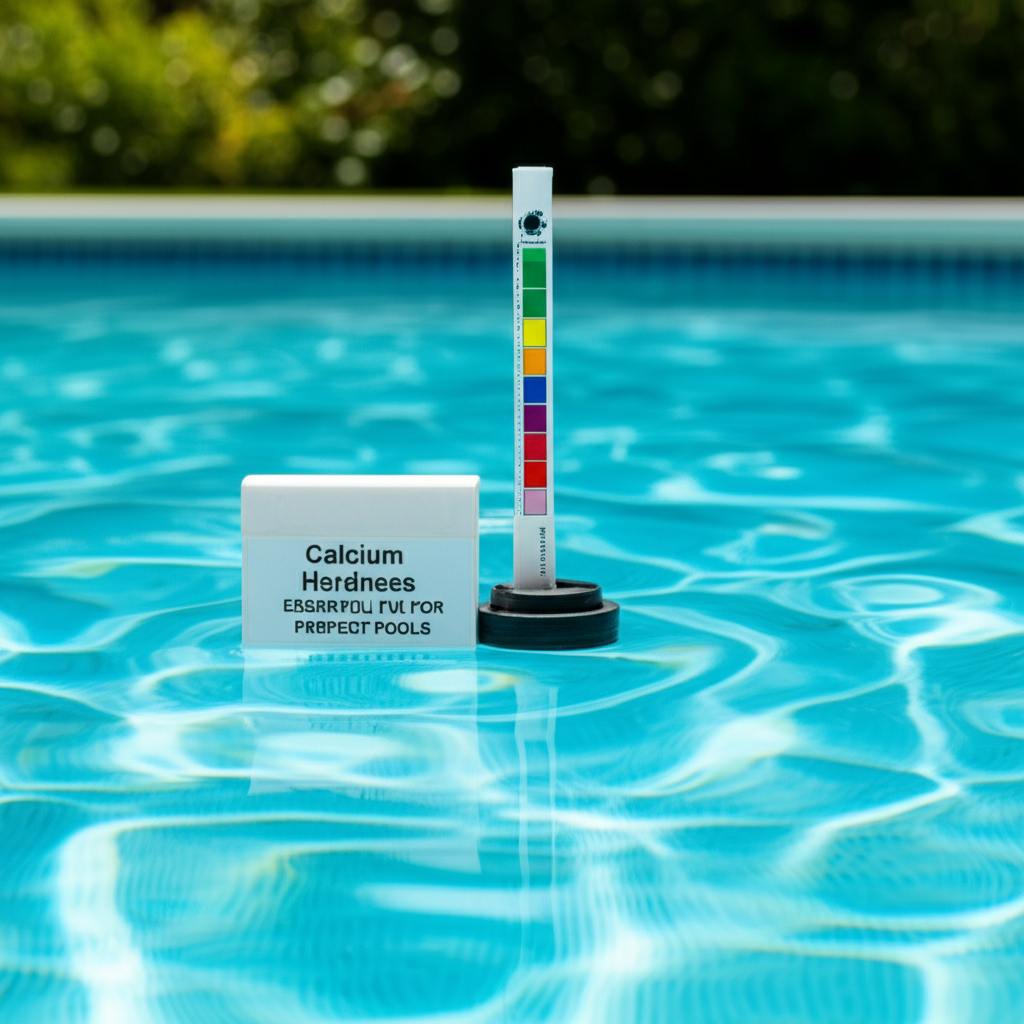
Regular testing is the cornerstone of effective water hardness management. You can test your pool’s calcium hardness using readily available test strips or more precise liquid test kits. Pool professionals typically recommend testing calcium hardness at least once a month, or more frequently if you’re refilling your pool or experiencing water balance issues. Once you have an accurate reading, you can determine if adjustments are needed.
Adjusting Your Pool’s Calcium Hardness Levels
Correcting imbalanced calcium hardness depends on whether you need to raise or lower the levels.
Raising Calcium Hardness
If your calcium levels are too low, you’ll need to add calcium chloride to your pool water. This is typically sold as an flakes or granules. Always dissolve the calcium chloride in a bucket of water first, then add it slowly around the perimeter of your pool while the pump is running to ensure even dispersion. Avoid adding large amounts directly to one spot, as this can cause localized clouding or scaling.
Lowering Calcium Hardness
Lowering calcium hardness is generally more challenging than raising it. The most common and effective method is to perform a partial drain and refill with fresh, softer water. If your local tap water is naturally very hard, this might be a recurring task. In extreme cases, or for owners seeking a more permanent solution, reverse osmosis systems can be used to treat the pool water, effectively removing much of the dissolved mineral content. Some chemical sequestering agents can temporarily bind with calcium to prevent scale, but they don’t actually remove the minerals from the water.
The Long-Term Impact on Your Pool Investment
Ignoring your pool’s calcium hardness can lead to significant long-term costs. The deterioration of plaster, the corrosion of expensive heating elements, and the constant battle against scale buildup not only diminish your pool’s aesthetic appeal but also shorten the lifespan of critical components. Regular monitoring and proactive adjustments ensure that your pool surfaces remain smooth, your equipment operates efficiently, and your water stays clear and inviting. By maintaining optimal water hardness, you protect your investment and reduce the need for costly repairs and renovations down the line.
Seeking Professional Pool Care
While managing calcium hardness can be a DIY task for many, the nuances of pool chemistry can sometimes be overwhelming. If you’re struggling to balance your water, or if you prefer to leave the complexities to the experts, professional help is invaluable. A reliable pool cleaning service can provide comprehensive pool maintenance, including regular testing, precise chemical adjustments, and expert advice to ensure your pool remains in pristine condition. For a hassle-free approach to perfect pool water and to ensure your Calcium Hardness is always where it should be, consider reaching out to experienced professionals. They can handle all aspects of your pool care, from routine checks to complex issue resolution, giving you peace of mind and more time to enjoy your swimming oasis. Visit https://californiabluepool.com for expert services that keep your pool sparkling and healthy.
Conclusion
Managing calcium hardness is an essential fix for perfect pools and a fundamental aspect of comprehensive pool care. By understanding its importance, regularly testing your water, and making timely adjustments, you can prevent costly damage, maintain crystal-clear water, and ensure your pool remains a source of joy for years to come. Don’t let this crucial element of pool chemistry fall to the wayside – a balanced pool is a beautiful, long-lasting pool.