Pool Flocculant vs Clarifier: Unlock Clear Water
April 9, 2026
Sun and Chlorine: Vital Tips for Perfect Pool Water
April 13, 2026
Hard Water Effects: The Silent Threat to Your Swimming Pool
Hard Water Effects, while often unseen in their initial stages, can silently wreak havoc on your swimming pool, leading to significant damage and costly repairs. For many pool owners, the term “hard water” might not immediately ring alarm bells, but its consequences, particularly the formation of pool scale, represent one of the most persistent and devastating challenges in pool maintenance. Understanding this pervasive issue is the first step in protecting your investment and ensuring a pristine swimming experience.
Understanding Hard Water: What Lies Beneath the Surface?
At its core, hard water is simply water that contains a high concentration of dissolved minerals, primarily calcium and magnesium. These minerals are naturally present in groundwater, picking them up as it flows through soil and rock formations. While these minerals are generally harmless to humans, they become problematic when introduced into a carefully balanced ecosystem like a swimming pool.
The level of hardness in water is measured in parts per million (ppm) or grains per gallon (gpg). For pools, an ideal calcium hardness level typically ranges from 150 to 250 ppm. When levels climb significantly higher than this, the stage is set for a variety of issues, with pool scale being the most prominent and damaging.
The Formation of Pool Scale: A Chemical Reaction in Your Backyard
Pool scale forms when the calcium and magnesium minerals in hard water precipitate out of solution and deposit onto pool surfaces and equipment. Several factors accelerate this process:
Evaporation: As water evaporates from your pool, the minerals are left behind, becoming more concentrated.
High pH: When the water’s pH level is too high (alkaline), calcium becomes less soluble and tends to “fall out” of the water.
High Alkalinity: Similar to pH, high total alkalinity can contribute to calcium carbonate precipitation.
High Water Temperature: Heat makes minerals less soluble. This is why scale is often more prevalent in pool heaters, where water is consistently heated.
The result is a rough, unsightly, and destructive mineral buildup that adheres to virtually any surface it touches in your pool.
The Devastating Pool Scale Truth: Beyond Aesthetics
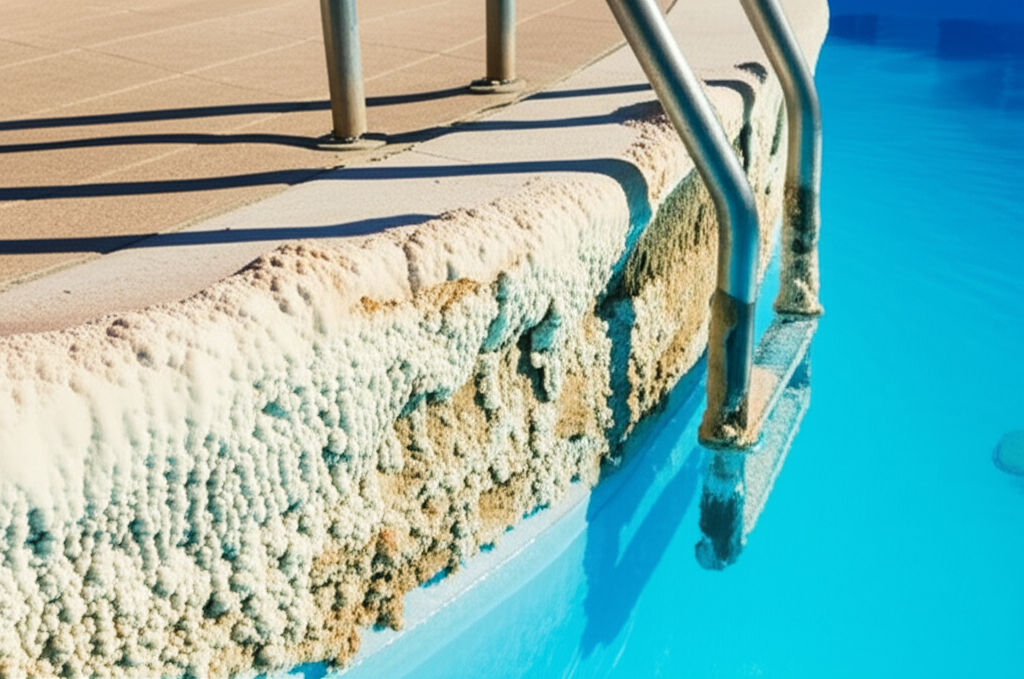
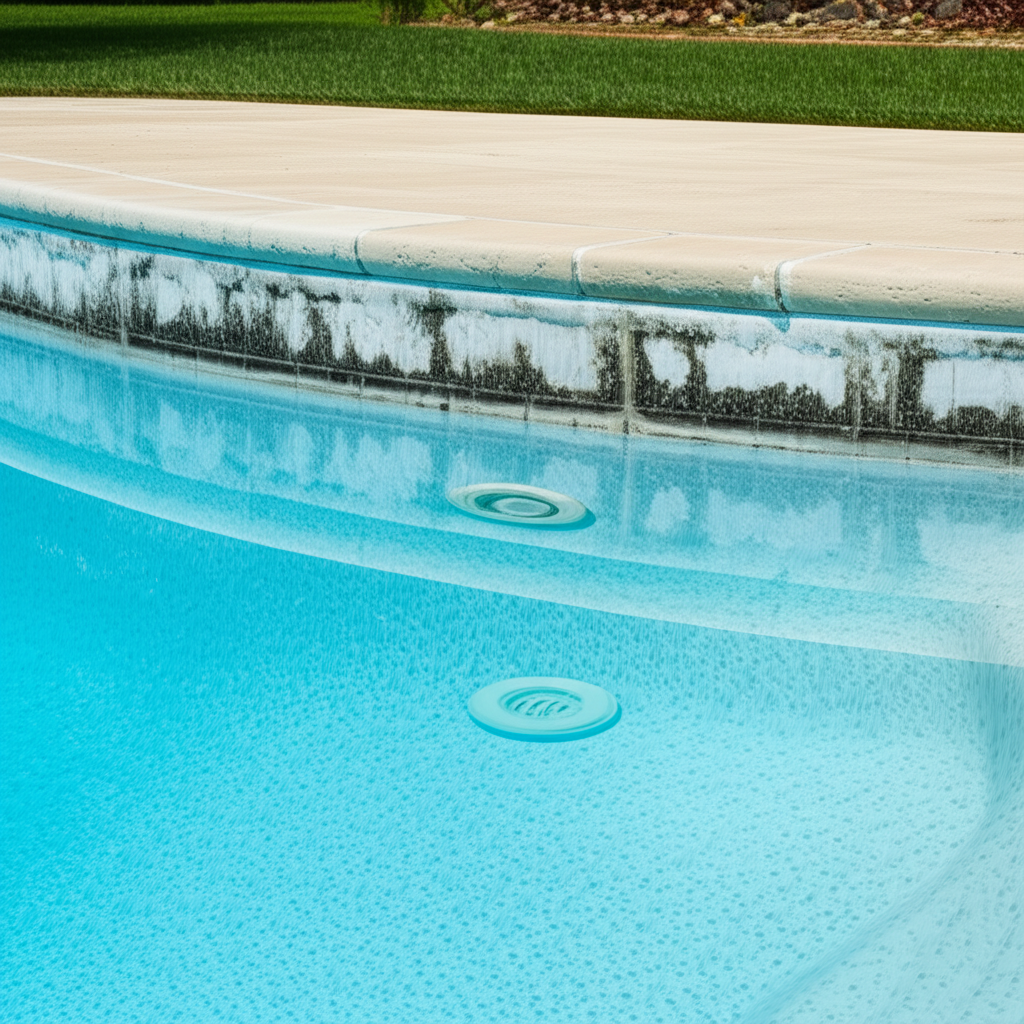
While the visible signs of pool scale — white, chalky deposits on tiles, grout, and pool walls — are clearly undesirable, the true devastation lies beneath the surface and within your pool’s vital systems.
Surface Damage: Pool scale can etch and stain plaster, pebble-tec, and fiberglass surfaces, making them rough and uncomfortable to the touch. Once scale has deeply embedded itself, removal can be challenging, often requiring aggressive chemical treatments or even resurfacing.
Equipment Breakdown: This is where hard water effects truly become costly.
Filters: Scale clogs filter media (sand, cartridges, or DE grids), reducing their efficiency and forcing your pump to work harder, leading to higher energy consumption and premature filter replacement.
Heaters: Scale builds up on the heat exchanger elements, severely impairing heating efficiency and potentially leading to complete system failure.
Pumps: Mineral buildup can stress pump motors and seals, shortening their lifespan.
automatic Pool Cleaners: Scale can obstruct the function of robotic and pressure-side cleaners, requiring more frequent maintenance and repairs.
Salt Cell Generators: For saltwater pools, scale is particularly detrimental to salt cells, coating the plates and reducing their ability to produce chlorine, eventually rendering them useless.
Water Chemistry Imbalance: Scale itself causes further chemical imbalances. Flaking scale released into the water can contribute to cloudiness, and managing hard water effects often means a constant battle with pH and alkalinity levels.
Increased Maintenance & Costs: Addressing severe pool scale requires significant effort, from extensive brushing to specialized chemical treatments. Ignoring it guarantees escalating repair bills and a less enjoyable pool. For comprehensive solutions and to prevent these issues, engaging professional pool cleaning services can provide peace of mind and extend the life of your pool and its equipment.
Identifying Hard Water Effects and Existing Pool Scale
Recognizing the signs early can save you significant time and money. Look out for:
A gritty, sandpaper-like texture on pool walls and tiles.
White, crusty deposits along the waterline, spillways, or inside skimmer baskets.
Cloudy or dull-looking pool water, even after regular filtering.
Reduced efficiency from your pool heater or filter system.
Stiff or rough bathing suits after swimming.
A persistent ring around the waterline that’s difficult to scrub off.
Preventing the Devastating Pool Scale
Prevention is always better — and cheaper — than cure. Regular and proactive pool maintenance is key to mitigating hard water effects.
1. Regular Water Testing: Test your pool water weekly for pH, total alkalinity, and calcium hardness. Aim for:
pH: 7.4-7.6
Total Alkalinity: 80-120 ppm
Calcium Hardness: 150-250 ppm (newer vinyl liner pools can tolerate slightly lower)
2. Maintain Balanced Chemistry: Immediately address any imbalances. Lower high pH with muriatic acid and raise low calcium hardness with calcium chloride.
3. Use Sequestering Agents: These specialized chemicals bind to the calcium and magnesium minerals, keeping them suspended in the water rather than allowing them to precipitate out. They don’t remove hardness but manage its effects. Add them regularly as part of your normal maintenance routine.
4. Brush Regularly: Consistent brushing of pool surfaces, especially at the waterline, can help dislodge early scale formation before it hardens.
5. Clean Filters: Regular backwashing or cleaning of your filter helps remove mineral buildup that can contribute to scale.
6. Consider Fill Water Treatment: If your source water is excessively hard, you might consider using a hose-end filter specifically designed to reduce mineral content when filling or topping off your pool.
Addressing Existing Pool Scale
If you’re already facing the challenge of existing hard water effects and pool scale, there are methods to tackle it:
Manual Removal: For light buildup, dedicated pool brushes, pumice stones, or specialized stain-removal tools can be effective, particularly on tiles and concrete surfaces.
Chemical Treatments: Acid-based scale removers are available but must be used with extreme caution, as they can alter water chemistry and damage certain pool surfaces if not applied correctly. Always follow manufacturer instructions precisely.
* Professional Intervention: For severe or widespread scale, or if you’re uncomfortable using strong chemicals, it’s highly recommended to consult with professional pool cleaning services. Experts have the right tools, knowledge, and experience to safely remove scale and restore your pool’s health without causing further damage. They can also provide comprehensive advice on preventing future issues. To explore reliable solutions for pool maintenance and scale removal, visit https://californiabluepool.com.
Conclusion
The devastating pool scale truth lies in its ability to silently erode the beauty and functionality of your swimming pool. By understanding hard water effects, embracing proactive water chemistry management, and knowing when to call in the professionals, you can effectively combat this common adversary. Your diligence will ensure your pool remains a sparkling refuge, free from the damaging grip of mineral buildup, for years to come.