Bromine Sanitizer: Ultimate & Better Than Chlorine
March 29, 2026
pH Increaser: Quick & Easy Pool pH Solutions
April 1, 2026
- Why Optimal pH is Non-Negotiable
- Mastering Your Pool's Chemistry: How to Lower Pool pH Effectively
- 1. pH Reducer (Sodium Bisulfate)
- 2. Muriatic Acid (Hydrochloric Acid)
- A Step-by-Step Guide to Lowering Your Pool's pH
- Maintaining Optimal pH: Prevention and Professional Help
Lower Pool pH: Achieving the Perfect Balance for a Sparkling Swim
Lower pool pH is a critical aspect of maintaining healthy, crystal-clear swimming pool water. Without proper pH levels, your pool can quickly become a breeding ground for problems, affecting everything from swimmer comfort to the longevity of your pool equipment. An imbalanced pH can lead to cloudy water, irritate skin and eyes, and significantly reduce the efficiency of your sanitizers, meaning you’re spending more on chemicals with less effective results. Thankfully, controlling your pool’s pH doesn’t have to be a complicated chore. With the right knowledge and tools, you can ensure your pool remains an inviting oasis.
Why Optimal pH is Non-Negotiable
The ideal pH range for swimming pools is generally between 7.4 and 7.6, mirroring the pH of human tears. When your pool’s pH rises above this range, moving into alkaline territory, several unwelcome issues can emerge:
Sanitizer Inefficiency: High pH reduces the effectiveness of chlorine and other sanitizers. For example, at a pH of 8.0, chlorine is only about 20% effective, meaning you’re essentially wasting most of it.
Irritation: Swimmers may experience itchy skin, red eyes, and even a burning sensation in their nose and throat.
Cloudy Water: Calcium and other minerals become less soluble in high pH water, leading to precipitation and cloudy water that can be challenging to clear.
Scale Formation: High pH can cause calcium to bond to pool surfaces, forming unsightly scale on tiles, walls, and pool equipment, which can restrict water flow and damage heaters.
Shortened Equipment Lifespan: Scale buildup can clog filters, corrode heaters, and reduce the efficiency of pumps, leading to costly repairs and replacements.
Regularly testing your pool water is the first step towards prevention and correction. Simple test strips, liquid test kits, or digital testers can quickly give you a reading of your pool’s pH level, informing you when it’s time to take action.
Mastering Your Pool’s Chemistry: How to Lower Pool pH Effectively
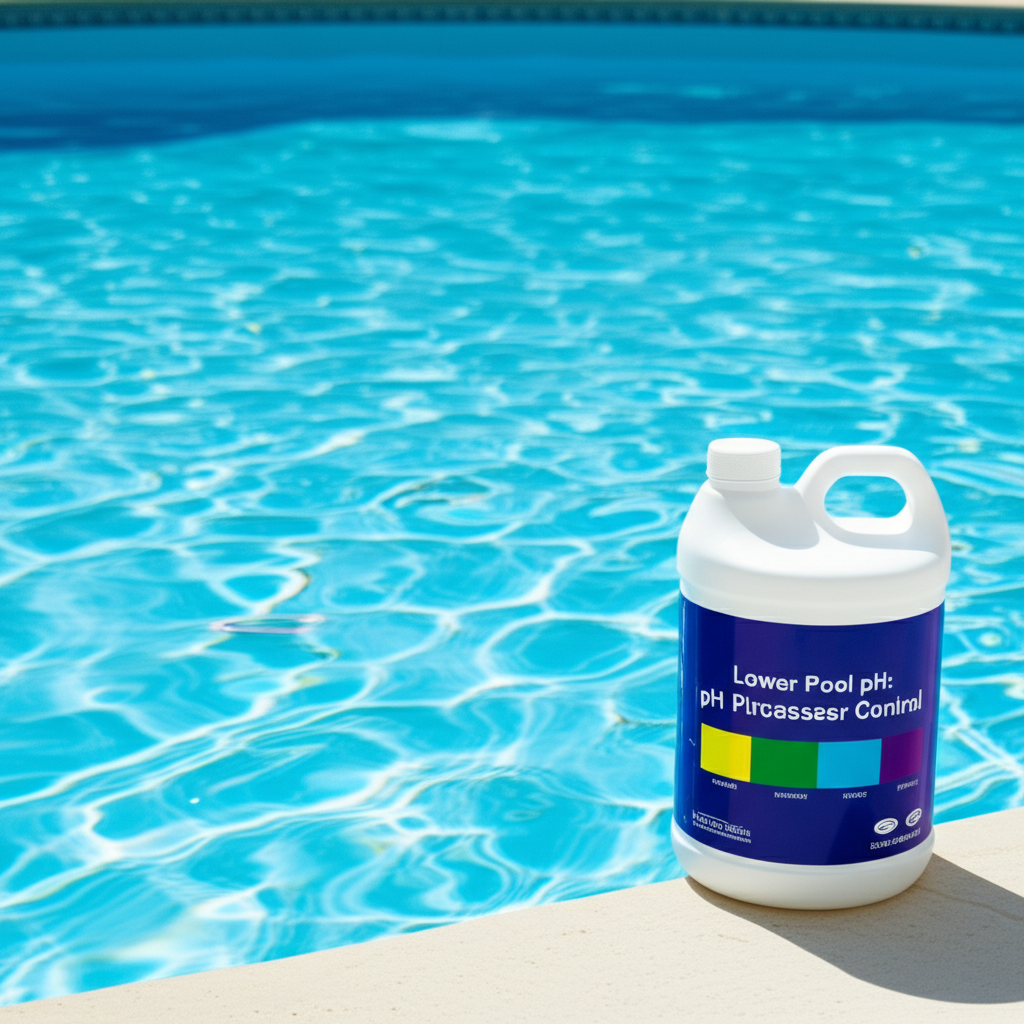
Once you’ve identified that your pool’s pH is too high, the good news is there are two primary, effective chemicals you can use: a granular pH Reducer (typically sodium bisulfate) or liquid Muriatic Acid. Both accomplish the same goal by introducing acidity to your pool water, but they differ in their handling, strength, and application.
1. pH Reducer (Sodium Bisulfate)
What it is: Granular pH reducer, often labeled as “pH Down” or “Acid Magic,” is a dry form of acid – specifically, sodium bisulfate. It’s considered a safer alternative to liquid acid for most home pool owners due to its ease of handling and reduced fuming.
How it works: When dissolved in water, sodium bisulfate creates sulfuric acid, which lowers the pH level. It also contributes to lowering total alkalinity, an important secondary consideration.
Advantages:
Safer Handling: Less hazardous than muriatic acid, with fewer fumes and less risk of chemical burns upon accidental contact.
Easier Storage: Granular form makes it less prone to spills and easier to store.
Controlled Application: Dissolves slower, allowing for a more gradual and controlled reduction in pH.
Application Tips:
Always follow the manufacturer’s instructions for dosage, as this will depend on your pool’s size and current pH level. Generally, you’ll dilute the granular product in a bucket of pool water before slowly pouring it around the perimeter of the pool, away from skimmers and returns, allowing it to disperse evenly.
2. Muriatic Acid (Hydrochloric Acid)
What it is: Muriatic acid, also known as hydrochloric acid, is a highly corrosive liquid acid. It’s a powerful chemical used extensively in pool maintenance due to its potency in lowering pH and total alkalinity quickly.
How it works: As a strong acid, muriatic acid rapidly introduces hydrogen ions into the water, effectively neutralizing alkaline substances and significantly reducing both pH and total alkalinity.
Advantages:
Potent and Fast-Acting: Works more quickly than sodium bisulfate, especially for significant pH adjustments.
Cost-Effective: Often more economical for larger pools or frequent adjustments.
Important Safety Precautions (A MUST!):
Due to its corrosive nature, handling muriatic acid requires extreme caution:
Always wear personal protective equipment (PPE): This includes chemical-resistant gloves, eye protection (goggles), and clothing that covers your skin.
Ensure Proper Ventilation: Work in a well-ventilated area to avoid inhaling strong, irritating fumes.
Dilute Before Adding: Never add water to acid; always add acid to water. Dilute the required amount of muriatic acid in a bucket of pool water (add acid slowly to the water) before gently pouring it into the pool.
Pour Slowly and Evenly: Distribute the diluted acid slowly around the deepest parts of the pool, avoiding splashing and direct contact with vinyl liners or painted surfaces. Keep the pump running to aid dispersion.
Store Properly: Keep muriatic acid in its original container, in a cool, dry, well-ventilated area, away from other chemicals and out of reach of children and pets.
A Step-by-Step Guide to Lowering Your Pool’s pH
1. Test Your Water: Begin by accurately testing your pool’s pH. Note the current reading and identify how far you need to lower it. Knowing your pool’s gallonage is also essential for accurate dosing.
2. Calculate Dosage: Refer to the instructions on your chosen pH reducer product. Most will provide a dosage chart based on your pool size and the desired pH reduction. Start with a conservative amount; you can always add more later.
3. Prioritize Safety (Especially with Muriatic Acid): Don your protective gear (gloves, goggles, long sleeves/pants). Ensure good ventilation.
4. Prepare and Add the Chemical:
For Granular pH Reducer: Predissolve the required amount in a bucket of pool water, stirring until mostly dissolved.
For Muriatic Acid: Carefully pour the measured amount of acid into* a bucket of pool water (never water into acid!), stirring gently to mix.
5. Distribute Evenly: With your pool pump running, slowly pour the diluted solution around the perimeter of the pool, aiming for areas with good circulation, and away from skimmers or return jets. Avoid pouring it all in one spot.
6. Allow for Circulation: Let your pool pump run for at least 6-8 hours to ensure the chemical is fully dispersed and mixed throughout the water.
7. Retest and Adjust: After the circulation period, retest your pH. If it’s still too high, repeat the process with a smaller, calculated dose. Patience is key; it’s better to make several small adjustments than one large one that overcorrects.
Maintaining Optimal pH: Prevention and Professional Help
Once you’ve successfully lowered your pool pH to the ideal range, ongoing maintenance is crucial. Regularly test your water (at least 2-3 times per week, or daily during heavy use or hot weather) and make small adjustments as needed. Factors like rain, bather load, and aeration (water features, waterfalls) can all influence pH levels.
If you find yourself struggling with persistent pH imbalances, dealing with cloudy water despite your best efforts, or simply want to ensure your pool chemistry is always expertly balanced, consider professional help. Expert pool cleaning services can provide routine testing, chemical balancing, and comprehensive maintenance to keep your pool in pristine condition year-round. They can also offer valuable advice on specific challenges your pool might face, ensuring you spend less time worrying about chemicals and more time enjoying your swim.
Lowering your pool’s pH is a fundamental skill for any pool owner. By understanding the importance of pH, recognizing the tools available (pH Reducer and Muriatic Acid), and following safe handling and application procedures, you can effortlessly maintain a healthy, inviting swimming environment for everyone to enjoy.