Lower Pool pH: Effective, Effortless Control
March 31, 2026
Raising TA: Unlock Easy Alkalinity with Baking Soda
April 3, 2026
- Why Balanced Pool pH Matters
- Understanding and Testing Your Pool's pH Level
- Common Causes of Low pH
- Utilizing a pH Increaser: Your Go-To Chemical Solution
- Spotlight on Soda Ash (Sodium Carbonate)
- How to Safely and Effectively Use a pH Increaser
- Safety Precautions:
- Beyond pH: Understanding Total Alkalinity
- When to Call the Pros
- Conclusion
pH Increaser: Your Essential Tool for Balanced Pool Water
pH Increaser is a crucial component in maintaining the health and enjoyment of your swimming pool. Without proper pH levels, your pool water can become uncomfortable for swimmers, less effective at sanitizing, and even damaging to your pool”s equipment. Understanding why pH balance is so important and how to effectively use solutions like a pH increaser, particularly granular products like Soda Ash, is fundamental to pristine pool care. This guide will walk you through everything you need to know about keeping your pool’s pH in the optimal range.
—
Why Balanced Pool pH Matters
The pH level of your pool water is a measure of its acidity or alkalinity, expressed on a scale from 0 to 14. A pH of 7 is neutral; anything below that is acidic, and anything above is alkaline. For swimming pools, the ideal pH range is between 7.4 and 7.6, mirroring the pH of human tears.
Maintaining this sweet spot is vital for several reasons:
1. Swimmer Comfort: Low pH (acidic water) can cause skin irritation, stinging eyes, and even nasal discomfort. High pH (alkaline water) can also lead to skin and eye irritation, though typically less severe than low pH.
2. Sanitizer Effectiveness: Your primary sanitizer, usually chlorine, works most efficiently within the ideal pH range. If the pH is too low, chlorine is used up too quickly, becoming corrosive. If it’s too high, chlorine becomes sluggish and ineffective, allowing algae and bacteria to thrive.
3. Equipment Longevity: Acidic water can corrode metal components in your pool’s filtration system, ladders, heaters, and even stain liners. High pH water isn’t corrosive but can lead to scale buildup on surfaces and inside plumbing, reducing efficiency and potentially blocking circulation.
4. Water Clarity: An imbalanced pH can lead to cloudy water, making your pool less inviting and obscuring potential hazards.
—
Understanding and Testing Your Pool’s pH Level
Before you can correct your pool’s pH, you need to know what it is. Regular water testing is the cornerstone of good pool maintenance. You can test your pool water using:
Test Strips: These are quick and easy to use, providing results within seconds. Dip the strip, wait, and compare the color changes to the chart on the bottle.
Liquid Test Kits: These offer more precise readings for pH and chlorine. You add pool water to vials, then specific reagents that change the water’s color, which you compare to a color chart.
Digital Testers: For the most accurate and hassle-free readings, digital testers can measure pH, temperature, and other parameters with a push of a button.
Test your pool water at least 2-3 times per week, or daily during heavy use or after significant rain. Always test in the morning before swimmers enter and before adding chemicals.
—
Common Causes of Low pH
Even with regular maintenance, your pool’s pH can drop for several reasons:
Rainfall: Rainwater is naturally acidic, lowering your pool’s pH.
Heavy Bather Load: Swimmers introduce substances like sweat, body oils, and lotions, which can be acidic. Carbon dioxide released from breathing also contributes.
Acidic Sanitizers: Some chlorine products, particularly dichlor and trichlor, are acidic and can gradually lower your pH over time.
Source Water: If your fill water has a naturally low pH, it will affect your pool water.
—
Utilizing a pH Increaser: Your Go-To Chemical Solution
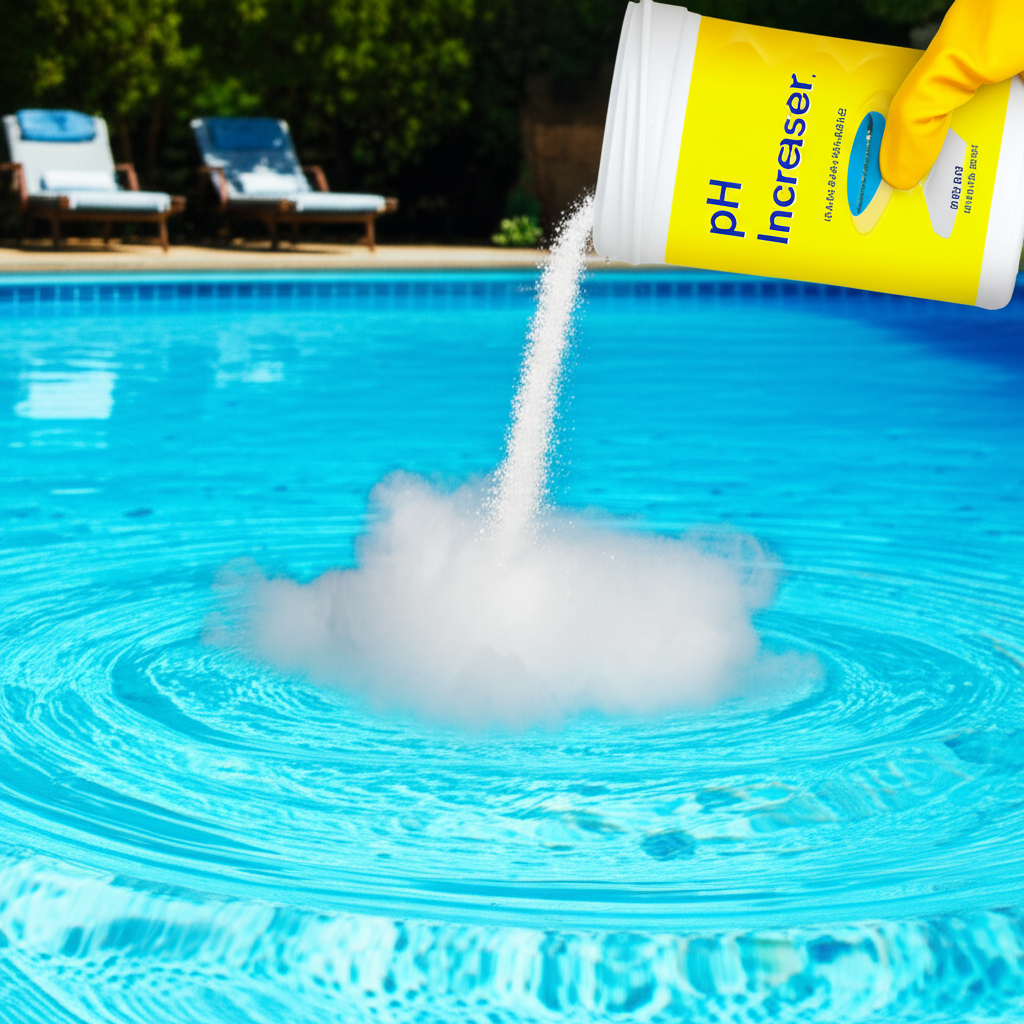
When your pool test shows a pH reading below the ideal 7.4, it’s time to reach for a pH increaser. These products are formulated to safely raise the pH of your pool water, bringing it back into the optimal range. They are generally alkaline substances that neutralize the acidity in the water.
One of the most common and effective types of pH increaser is Soda Ash, also known as sodium carbonate.
Spotlight on Soda Ash (Sodium Carbonate)
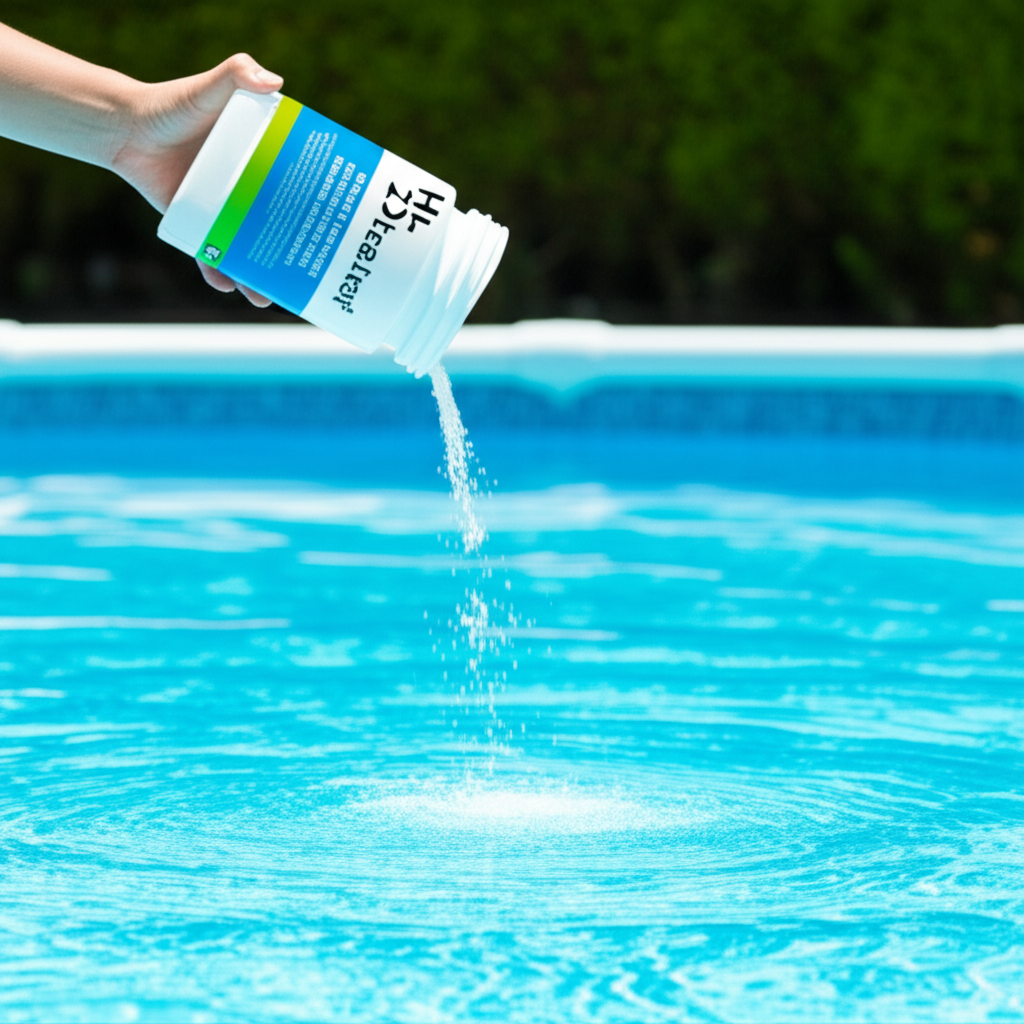
Soda Ash is a white, granular powder that readily dissolves in water and is highly effective at raising pool pH. It’s a popular choice for pool owners due to its affordability and efficiency. When added to pool water, sodium carbonate reacts to increase the water’s alkalinity, which in turn raises the pH.
It’s important not to confuse Soda Ash with baking soda (sodium bicarbonate). While baking soda also has alkaline properties, its primary purpose in pool care is to increase total alkalinity (TA), which helps stabilize pH but isn’t as direct or potent for raising pH itself. For a low pH reading, Soda Ash is the specific chemical you need.
—
How to Safely and Effectively Use a pH Increaser
Using a pH increaser correctly is crucial for achieving desired results and ensuring safety.
1. Test Your Water Accurately: Always start with an up-to-date and accurate pH reading.
2. Calculate Dosage: Refer to the manufacturer’s instructions on your chosen pH increaser product. The amount needed will depend on your pool’s volume and the current pH reading. It’s almost always better to add less than you think you need and re-test, rather than overshooting the target.
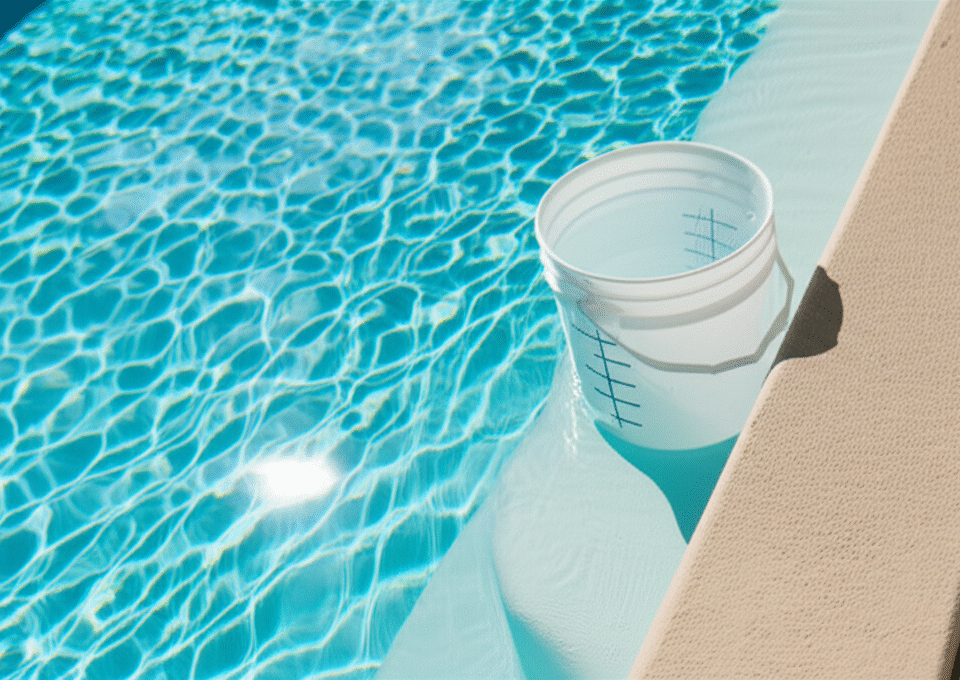
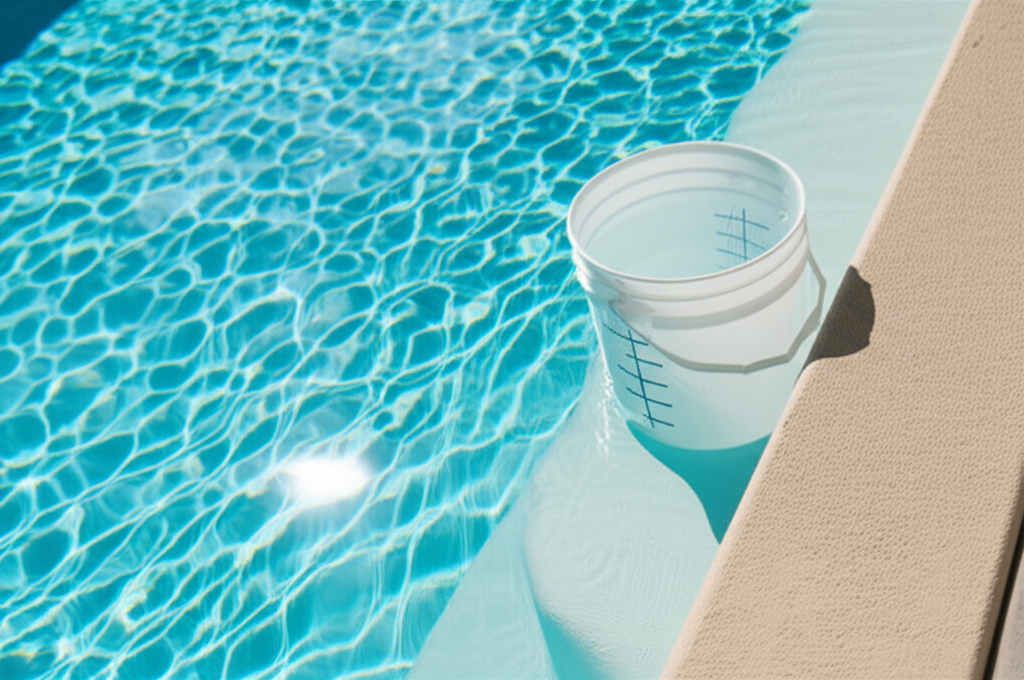
3. Prepare the Solution: Never add granular chemicals directly to the skimmer or in a concentrated pile on your pool surface. Dissolve the recommended amount of Soda Ash in a bucket of pool water (1-2 gallons) first. Stir until fully dissolved.
4. Distribute Evenly: With your pool pump running, slowly pour the dissolved mixture around the perimeter of the deep end of your pool. Avoid pouring it directly into the skimmer or near any return jets, as this can affect the filtration system.
5. Circulate and Retest: Allow your pump to circulate the water for at least 4-6 hours (or overnight) to ensure the chemical is fully dispersed. After this period, re-test your pH level. If it’s still low, repeat the process, adding smaller amounts until the desired pH is reached.
Safety Precautions:
Always wear appropriate personal protective equipment, including gloves and eye protection, when handling pool chemicals.
Avoid inhaling dust from powdered chemicals like Soda Ash. Work in a well-ventilated area.
Never mix different pool chemicals together, as this can create dangerous reactions.
* Store chemicals in a cool, dry place, away from children and pets, and according to manufacturer’s instructions.
—
Beyond pH: Understanding Total Alkalinity
While focused on pH, it’s worth noting the close relationship with Total Alkalinity (TA). TA is a measure of the total concentration of alkaline substances in your pool water. Adequate TA (typically 80-120 ppm) acts as a buffer, preventing sudden swings in pH. When adding a pH increaser like Soda Ash, it will also slightly increase your TA. If your TA is too low, you might find your pH frequently fluctuates. If you consistently struggle with balancing these levels, or need help with overall pool cleaning services, consider professional assistance.
—
When to Call the Pros
Maintaining perfect pool chemistry can sometimes feel like a delicate dance. If you find yourself consistently struggling with water chemistry, dealing with persistent clarity issues, or simply want to ensure your pool is always pristine without the hassle, don’t hesitate to reach out to professional pool cleaning services. Experts can provide comprehensive water testing, precise chemical balancing, and general maintenance, saving you time and ensuring your pool is safe and enjoyable. For reliable and comprehensive pool care, including expert chemical balancing and thorough cleaning, visit https://californiabluepool.com.
—
Conclusion
A balanced pool pH is the bedrock of a healthy, comfortable, and efficient swimming pool. By understanding the importance of pH, regularly testing your water, and knowing how to effectively use a pH increaser like Soda Ash, you can ensure your pool remains an inviting oasis. Remember, consistency in testing and cautious application of chemicals are key to enjoying sparkling, perfectly balanced water all season long.