pH Increaser: Quick & Easy Pool pH Solutions
April 1, 2026
Langelier Saturation Index: Unlock Optimal Water Balance
April 5, 2026
- What is Total Alkalinity (TA) and Why Does It Matter?
- The Perils of Low Total Alkalinity
- Why Baking Soda is Your Go-To for Raising TA
- Calculating the Right Amount for Raising TA
- Step-by-Step Guide to Raising TA with Baking Soda
- Maintaining Optimal TA Levels
Raising TA in your swimming pool is a simple yet crucial step towards achieving crystal-clear, balanced, and swimmer-friendly water. Many pool owners are familiar with the importance of pH, but often overlook its vital partner: Total Alkalinity (TA). When your TA levels are low, even daily adjustments to pH can feel like a losing battle. The good news is, unlocking ideal alkalinity is incredibly straightforward, and the secret ingredient is likely already in your pantry: Baking Soda.
What is Total Alkalinity (TA) and Why Does It Matter?
Total Alkalinity (TA) refers to the concentration of alkaline substances in your pool water, primarily bicarbonates, carbonates, and hydroxides. Think of TA as your water’s “pH buffer.” Its primary role is to stabilize the pH level, preventing it from swinging wildly due to external factors like rain, swimmer load, chemical additions (especially sanitizers), or even the sun.
The ideal range for Total Alkalinity in most swimming pools is between 80 to 120 parts per million (ppm). Maintaining this sweet spot ensures that your pH remains steady, acids don’t cause rapid drops, and bases don’t cause sudden spikes. This stability is not just about chemical balance; it directly impacts the comfort of swimmers, the effectiveness of your sanitizer, and the longevity of your pool equipment.
The Perils of Low Total Alkalinity
When your pool’s TA falls below the recommended range (typically below 80 ppm), you’ll start to experience a series of frustrating and potentially damaging issues:
1. pH Bounce: This is the most common and immediate symptom. Your pH will become unstable, rapidly fluctuating between high and low levels. This makes it incredibly difficult to maintain the ideal pH range (7.4-7.6), leading to a constant battle with your water chemistry.
2. Corrosion and Staining: Low TA makes your water more acidic and corrosive. Over time, this can lead to damage to your pool’s components, including metal ladders, heaters, pump seals, and even the pool surface itself (etching plaster). It can also cause staining from dissolved metals.
3. Irritation to Swimmers: Rapidly fluctuating or consistently low pH (due to low TA) can cause skin and eye irritation, making swimming an uncomfortable experience.
4. Ineffective Sanitizers: Most pool sanitizers, like chlorine, work most efficiently within a specific pH range. When TA is low and pH is erratic, your sanitizer’s effectiveness plummets, potentially leading to algae growth and cloudy water, despite adding plenty of chemicals.
Why Baking Soda is Your Go-To for Raising TA
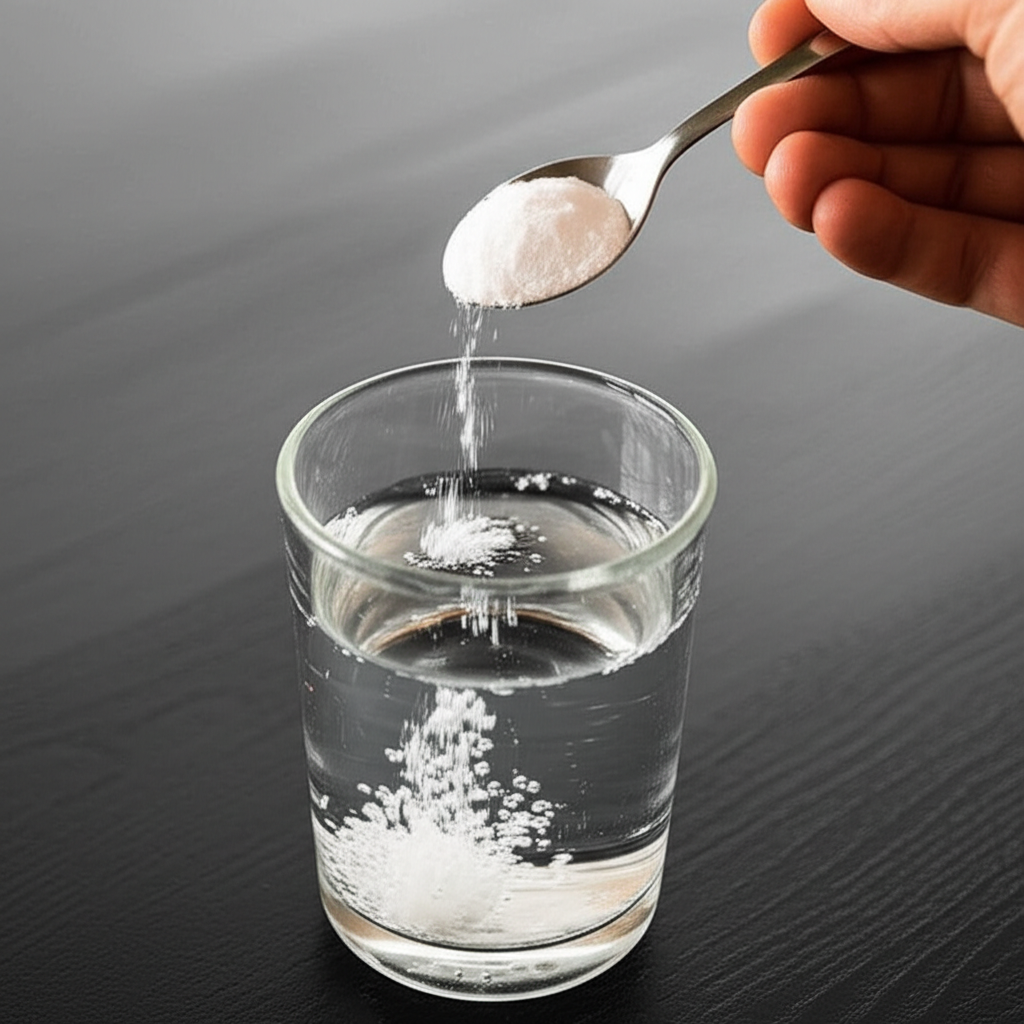
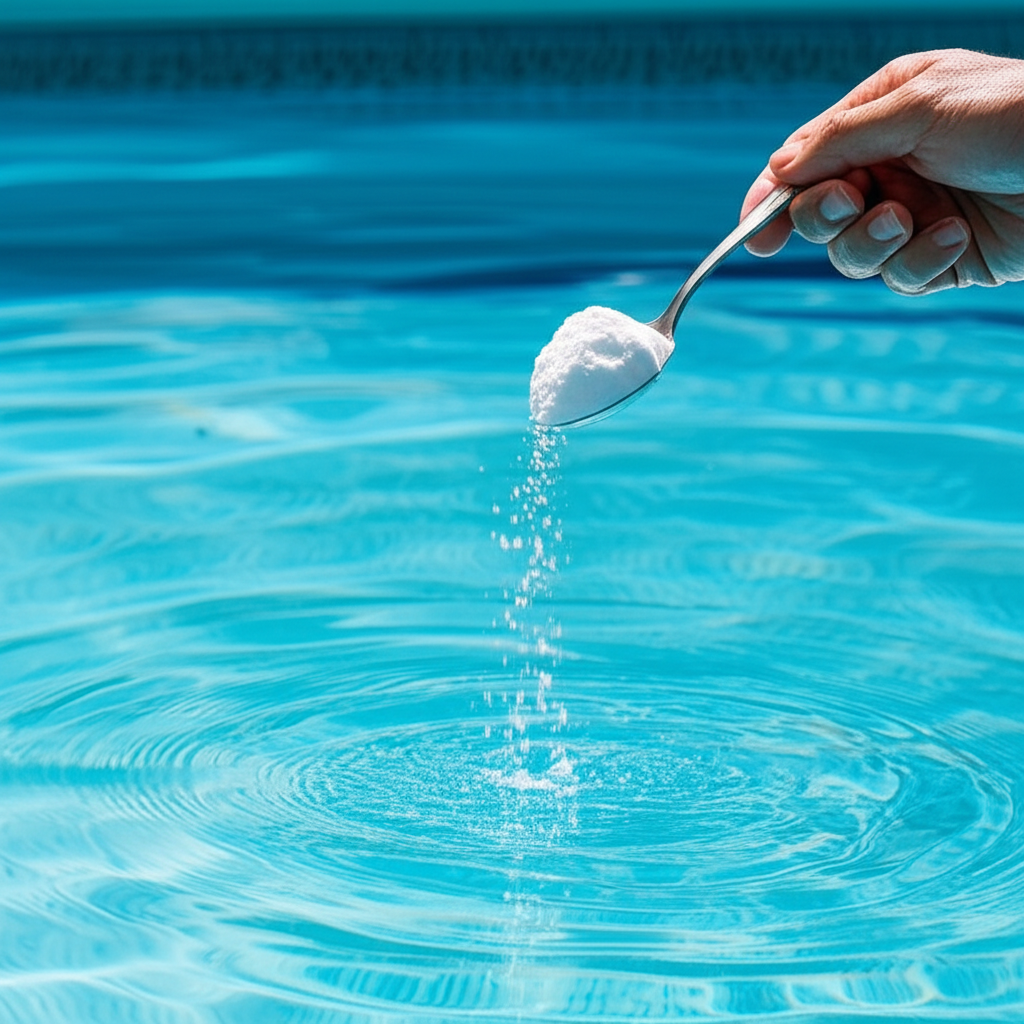
Fortunately, correcting low TA is one of the simplest pool chemistry adjustments you can make, and baking soda is the hero of this story. Chemically known as sodium bicarbonate (NaHCO₃), baking soda is a pure and effective alkalinity increaser.
Here’s why it’s the preferred choice:
Effective Alkalinity Booster: When dissolved in water, baking soda releases bicarbonate ions, which directly contribute to increasing your pool’s Total Alkalinity.
Minimal pH Impact: While it does have a slightly alkaline pH itself, in the quantities typically used to raise TA, baking soda has a relatively minor impact on your pool’s overall pH level. This allows you to adjust TA without drastically overshooting your pH target.
Cost-Effective and Readily Available: Baking soda is inexpensive and can be found in bulk at most grocery stores or warehouse clubs, making it an economical solution for pool owners.
Calculating the Right Amount for Raising TA
Before adding any chemicals, always test your pool water. You’ll need to know your current TA level and your pool’s accurate volume (in gallons).
A general rule of thumb for raising TA is that 1.5 pounds of baking soda will raise the Total Alkalinity by approximately 10 ppm for every 10,000 gallons of water.
Let’s do a quick example:
Your pool is 20,000 gallons.
Your current TA is 60 ppm, and you want to reach 100 ppm (a 40 ppm increase).
For a 10 ppm increase in 10,000 gallons, you need 1.5 lbs.
For a 40 ppm increase in 10,000 gallons, you need 1.5 lbs 4 = 6 lbs.
Since your pool is 20,000 gallons (double), you’ll need 6 lbs 2 = 12 lbs of baking soda.
Always err on the side of adding less and retesting. It’s easier to add more than to remove excess.
Step-by-Step Guide to Raising TA with Baking Soda
Follow these simple steps for safely and effectively increasing your pool’s Total Alkalinity:
1. Test Your Water: Use a reliable test kit or strips to get an accurate reading of your current TA (and pH, calcium hardness, and sanitizer levels).
2. Calculate the Required Amount: Based on your pool’s volume and desired TA increase, determine how much baking soda you need.
3. Prepare the Baking Soda (Optional but Recommended): For faster dissolution and to avoid clumping, you can pre-dissolve the baking soda in a bucket of pool water. This helps prevent the powder from settling on the bottom and potentially clouding the water. Fill a clean bucket with pool water and slowly add the baking soda, stirring until largely dissolved.
4. Add in Portions: It’s best practice to add about half to two-thirds of your calculated amount first, especially if you need a significant increase.
5. Broadcast Evenly: With your pool pump running, slowly pour the dissolved baking soda mixture (or the dry powder directly, broadcasting finely) over the deep end of your pool. This allows for better dispersion and prevents concentrated amounts from affecting plumbing or surfaces.
6. Circulate: Allow your pump to run for at least 4-6 hours (or overnight) to thoroughly circulate the water and mix the baking soda.
7. Re-test: After the circulation period, re-test your TA levels. If it’s still below your target, calculate the remaining amount needed and repeat the process. Avoid adding more than 20-30 ppm TA increase per day to prevent dramatic changes.
Maintaining Optimal TA Levels
Once you’ve achieved the ideal TA range, regular weekly testing is key to keeping it there. Factors that can lower TA include heavy rain (diluting pool water), adding acid to lower pH, or significant amounts of fresh fill water. Conversely, adding muriatic acid to lower pH will also lower TA, while adding soda ash to raise pH will also raise TA. Understanding these relationships helps you maintain a balanced pool.
If you find yourself constantly struggling with unbalanced water, or if you prefer to leave the complexities of pool chemistry to the experts, don’t hesitate to reach out to pool cleaning services. Professionals offer comprehensive pool maintenance that ensures not just balanced water, but also sparkling cleanliness and optimal equipment function. For reliable and thorough pool care specialists, consider contacting https://californiabluepool.com for their expert assistance.
By understanding the role of Total Alkalinity and utilizing baking soda as your secret weapon, you can effortlessly maintain a balanced, healthy, and enjoyable swimming pool all season long. Consistent water testing and timely adjustments are the cornerstones of effortless pool ownership.