Pool Inspection: Your Essential Buying Guide
June 4, 2026
Pool Heaters: Ultimate, Affordable Warmth
June 8, 2026
- The Reliable Sand Filter
- The Efficient Cartridge Filter
- The Crystal-Clear DE (Diatomaceous Earth) Filter
- Choosing the Right Pool Filters for Your Oasis
- Professional Pool Filter Maintenance and Services
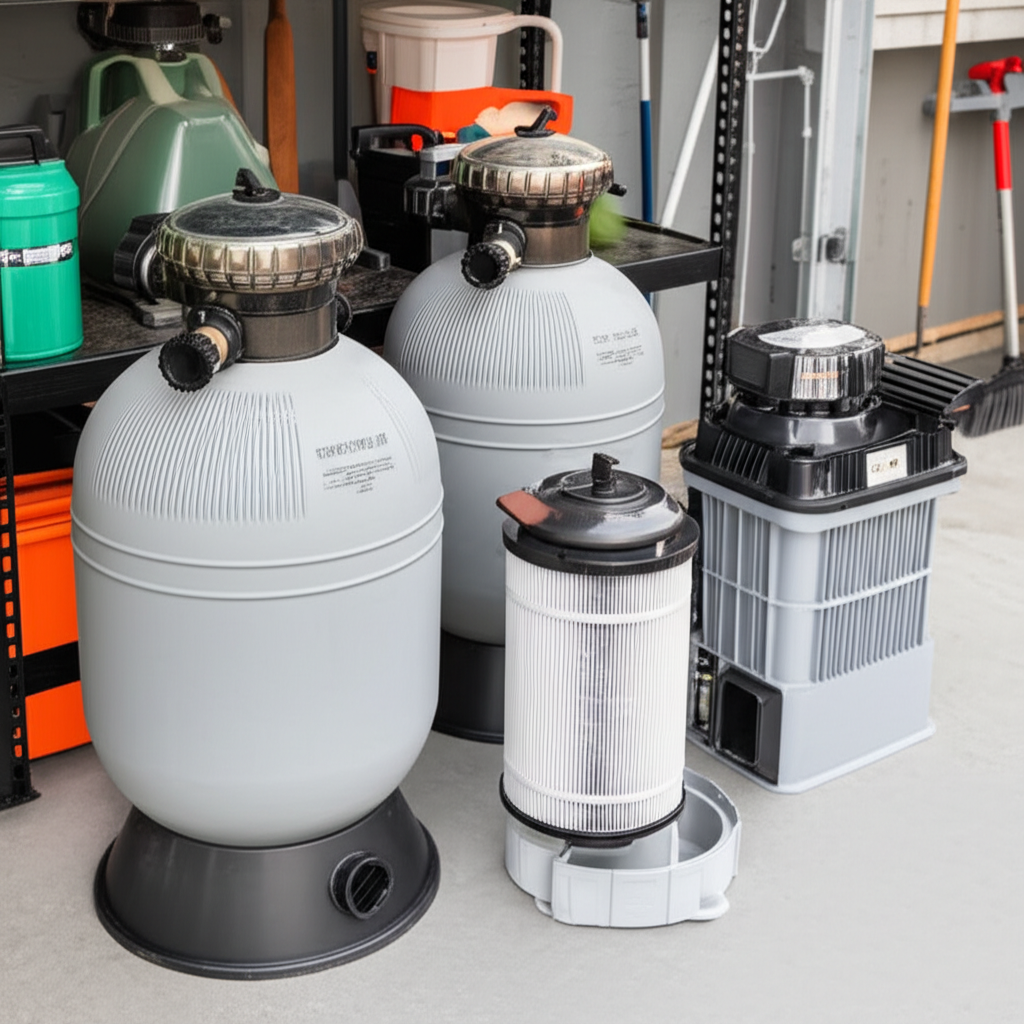
Pool Filters are the unsung heroes of any pristine swimming environment, diligently working behind the scenes to keep your water sparkling clean and inviting. Without an efficient filtration system, your pool would quickly become a murky, unhygienic mess of debris, algae, and microscopic contaminants. Understanding the different types of filters available – sand, cartridge, and Diatomaceous Earth (DE) – is crucial for any pool owner seeking to optimize water quality, minimize maintenance, and make informed choices for their aquatic haven.
This guide will break down each major pool filter type, detailing how they work, their advantages and disadvantages, and the maintenance routines required to keep them performing at their best.
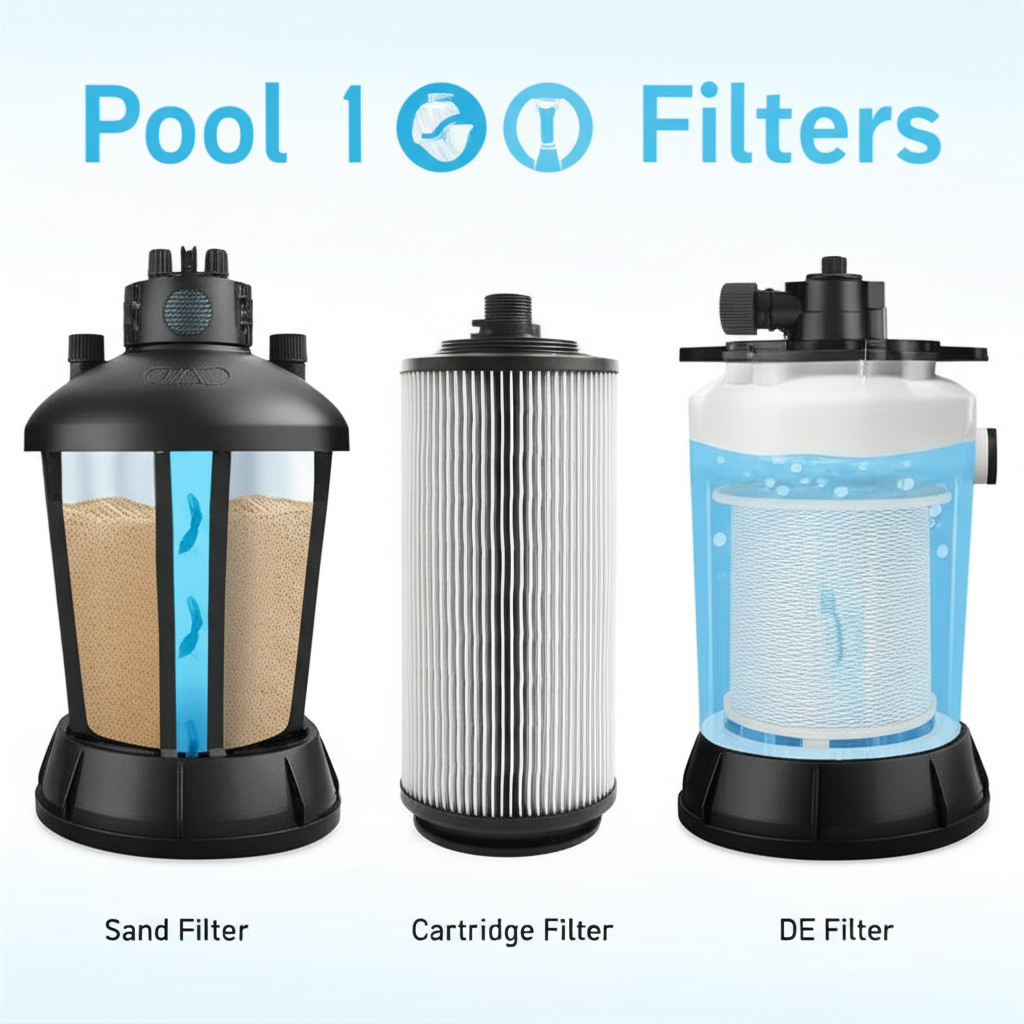
The Reliable Sand Filter
Sand filters have long been a popular and economical choice for pool owners due to their simplicity and durability.
How They Work:
At its core, a sand filter is a large tank filled with specialized filter sand. As pool water is pumped into the top of the tank, it’s forced down through the layers of sand. The sharp edges of the sand grains trap impurities, debris, and even some microscopic particles. The filtered water then exits through laterals at the bottom of the tank and returns to the pool.
Pros:
Cost-Effective: Generally the most affordable option upfront.
Low Maintenance: Requires less frequent cleaning compared to other types.
Durable: Sand filters are robust and can last for many years with proper care.
Easy to Operate: Simple backwashing procedure.
Cons:
Least Efficient Filtration: Sand filters typically filter down to about 20-40 microns, meaning some finer particles might pass through.
Water Waste: Backwashing, while simple, expels a significant amount of water from the pool.
Adds Resistance: Over time, the sand compacts, increasing resistance and potentially reducing pool circulation efficiency if not backwashed properly.
Maintenance:
The primary maintenance for a sand filter is “backwashing.” This process reverses the water flow through the filter, flushing the trapped debris out through a waste line. Backwashing is usually performed when the filter’s pressure gauge reads 8-10 PSI above its clean operating pressure. The filter sand itself typically needs to be replaced every 5-7 years, as the sand grains wear down and become less effective at trapping debris.
The Efficient Cartridge Filter
Cartridge filters offer a step up in filtration efficiency compared to sand, providing clearer water while often being more water-conscious.
How They Work:
Instead of sand, these filters use one or more cylindrical cartridges made of finely pleated fabric (typically polyester). As water passes through the pleats, incredibly small particles are trapped in the fabric’s vast surface area. The filtered water then exits the tank and returns to the pool.
Pros:
Excellent Filtration: Cartridge filters can trap particles as small as 10-20 microns, resulting in noticeably clearer water than sand filters.
Water-Saving: They do not require backwashing, so no water is sent to waste.
Easy to Clean: Cleaning involves removing and rinsing the cartridges, a straightforward process.
Compact: Often take up less space than other filter types.
Cons:
Higher Initial Cost: More expensive than sand filters upfront.
Regular Cleaning: Cartridges need to be removed and cleaned manually, which can be a more involved process than backwashing.
Replacement Costs: Cartridges need replacing every 1-3 years, depending on usage and cleaning frequency.
Maintenance:
Maintenance for a cartridge filter involves turning off the pump, opening the filter tank, removing the cartridges, and thoroughly rinsing them with a garden hose. For heavy grime or stubborn oils, a specialized filter cleaning solution soak may be necessary. Cartridges should be cleaned when the filter’s pressure gauge reads 8-10 PSI above its clean operating pressure, or at least every 4-6 weeks during peak swimming season.
The Crystal-Clear DE (Diatomaceous Earth) Filter
For the ultimate in water clarity, DE filters are often considered the gold standard, capable of polishing your pool water to an unparalleled sparkle.
How They Work:
DE filters use a fine powder made from fossilized diatoms (single-celled aquatic organisms). This powder is “charged” onto a series of fabric-covered grids inside the filter tank. As water flows through the DE-coated grids, the microscopic pores in the DE trap even the tiniest particles, filtering down to an incredible 2-5 microns.
Pros:
Superior Filtration: DE filters provide the finest level of filtration among the three types, delivering truly crystal-clear water.
Removes Very Fine Particles: Capable of trapping dust, pollen, algae spores, and even some bacteria.
Cons:
Highest Initial Cost: Generally the most expensive filter type to purchase and install.
Complex Maintenance: Requires more involved cleaning processes and handling of DE powder.
DE Powder Handling: DE powder must be carefully handled and disposed of responsibly, as it can be a respiratory irritant.
Water Waste: Backwashing expels water and used DE powder.
Maintenance:
DE filters require both backwashing and periodic “grid cleaning.” Backwashing is similar to a sand filter, flushing out accumulated debris and some DE powder. After backwashing, fresh DE powder must be added to recharge the filter. Periodically (every 2-4 months, or when persistent high pressure occurs), the filter tank needs to be opened, the grids removed, and thoroughly cleaned with a hose to remove embedded DE and debris. This deeper cleaning is essential for optimal filter performance.
Choosing the Right Pool Filters for Your Oasis
Selecting the ideal filter system for your pool involves weighing several factors:
Budget: Sand filters are the most economical upfront, followed by cartridge, then DE.
Desired Water Clarity: If crystal-clear water is your top priority, DE is unmatched. Cartridge offers excellent clarity, while sand is sufficient for adequate cleanliness.
Maintenance Preference: Sand filters require simple backwashing. Cartridge filters require manual cleaning but save water. DE filters have more involved backwashing and grid cleaning processes.
Environmental Concerns: Cartridge filters save water as they don’t require backwashing. Both sand and DE filters use water during backwashing.
Professional Pool Filter Maintenance and Services
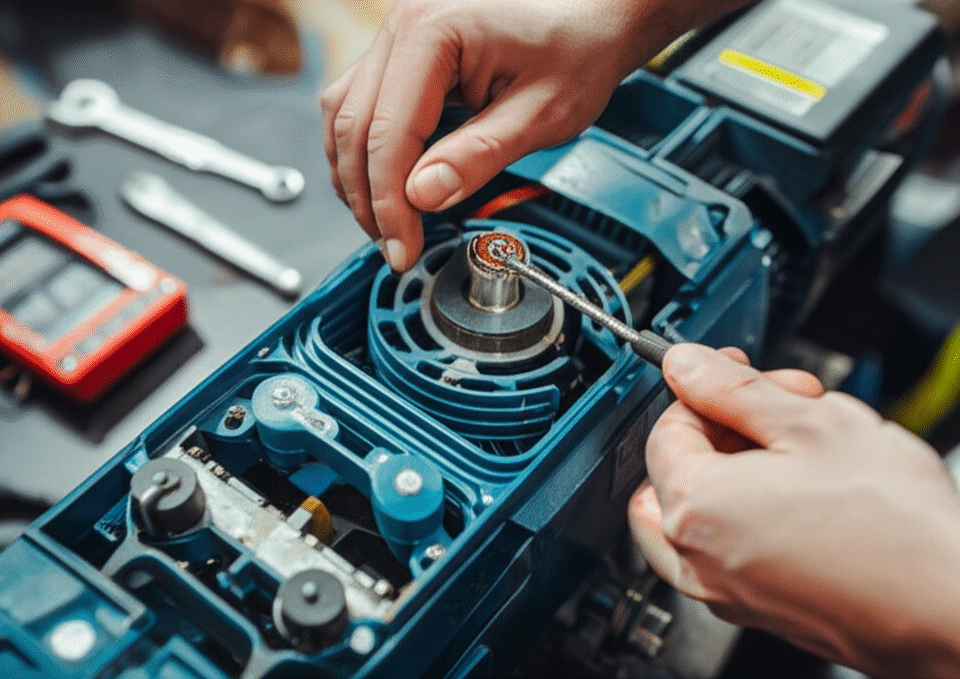
While many pool owners handle routine filter maintenance themselves, there are times when professional intervention is invaluable. For complex repairs, the initial setup and sizing of a new filter system, deep cleaning of DE grids, or complete filter replacement, a professional pool service can ensure the job is done correctly and efficiently. Many of these tasks fall under comprehensive pool cleaning services. If you require assistance with your pool’s filtration system, or any other aspect of your pool’s upkeep, reaching out to experts who understand the nuances of each filter type can save you time, effort, and potential headaches in the long run. Learn more about how professionals can keep your pool pristine at https://californiabluepool.com.
Ultimately, all three types of pool filters are designed to provide you with a clean and safe swimming environment. By understanding the characteristics of sand, cartridge, and DE filters, you can make an informed decision that aligns with your budget, lifestyle, and expectations for water quality. Regular and proper maintenance, regardless of the filter type, is the key to extending its lifespan and enjoying consistently sparkling pool water for years to come.