Ozone Generator: Ultimate Effortless Pool System
March 21, 2026
Phosphates: Ultimate Guide to a Sparkling Pool
March 24, 2026
- The Invisible Realm: Why Pool Testing is Non-Negotiable
- Decoding Your Pool's Health: Essential Parameters
- Selecting Your Ultimate Pool Testing Tool: Water Test Kits Explored
- The Simplicity of Pool Test Strips
- The Precision of Liquid Test Kits
- Beyond the Basics: Interpreting and Acting on Results
- Tips for Accurate Testing & Optimal Pool Health
- Conclusion
Water Test Kits are the unsung heroes of pool ownership, providing the ultimate, effortless way to ensure your swimming sanctuary remains pristine, safe, and enjoyable. Properly balanced pool water isn’t just about aesthetics; it’s crucial for the health of your swimmers, the longevity of your pool equipment, and protecting your investment. Diving into crystal-clear water requires understanding what’s truly going on beneath the surface, and that’s precisely where these indispensable tools come into play.
The Invisible Realm: Why Pool Testing is Non-Negotiable
While your pool water might look inviting, a clear appearance can be deceptive. Unbalanced water can harbor invisible threats and cause significant problems over time. High pH levels, for instance, can reduce chlorine’s effectiveness, leading to algae blooms and cloudy water, while low pH can turn water corrosive, damaging equipment and irritating swimmers’ eyes and skin. Imbalances in alkalinity, calcium hardness, or cyanuric acid can also contribute to a host of issues, from staining and scaling to water that’s difficult to sanitize. Regular testing is your first line of defense, empowering you to catch problems early and maintain a healthy aquatic environment.
Decoding Your Pool’s Health: Essential Parameters
To effectively maintain your pool, you need to understand what you’re testing for. The key parameters typically include:
pH: Measures acidity or alkalinity. Ideal range is 7.4-7.6.
Free Chlorine: The active sanitizer working to kill germs and algae.
Total Chlorine: Includes both free and combined (used up) chlorine.
Alkalinity: Acts as a buffer to prevent extreme pH fluctuations. Ideal range is 80-120 ppm.
Calcium Hardness: Prevents plaster etching or scaling. Ideal range is 200-400 ppm.
Cyanuric Acid (CYA): Stabilizes chlorine from burning off too quickly in sunlight. Ideal range is 30-50 ppm.
Monitoring these levels regularly allows you to make precise adjustments, ensuring everything remains within the optimal ranges.
Selecting Your Ultimate Pool Testing Tool: Water Test Kits Explored
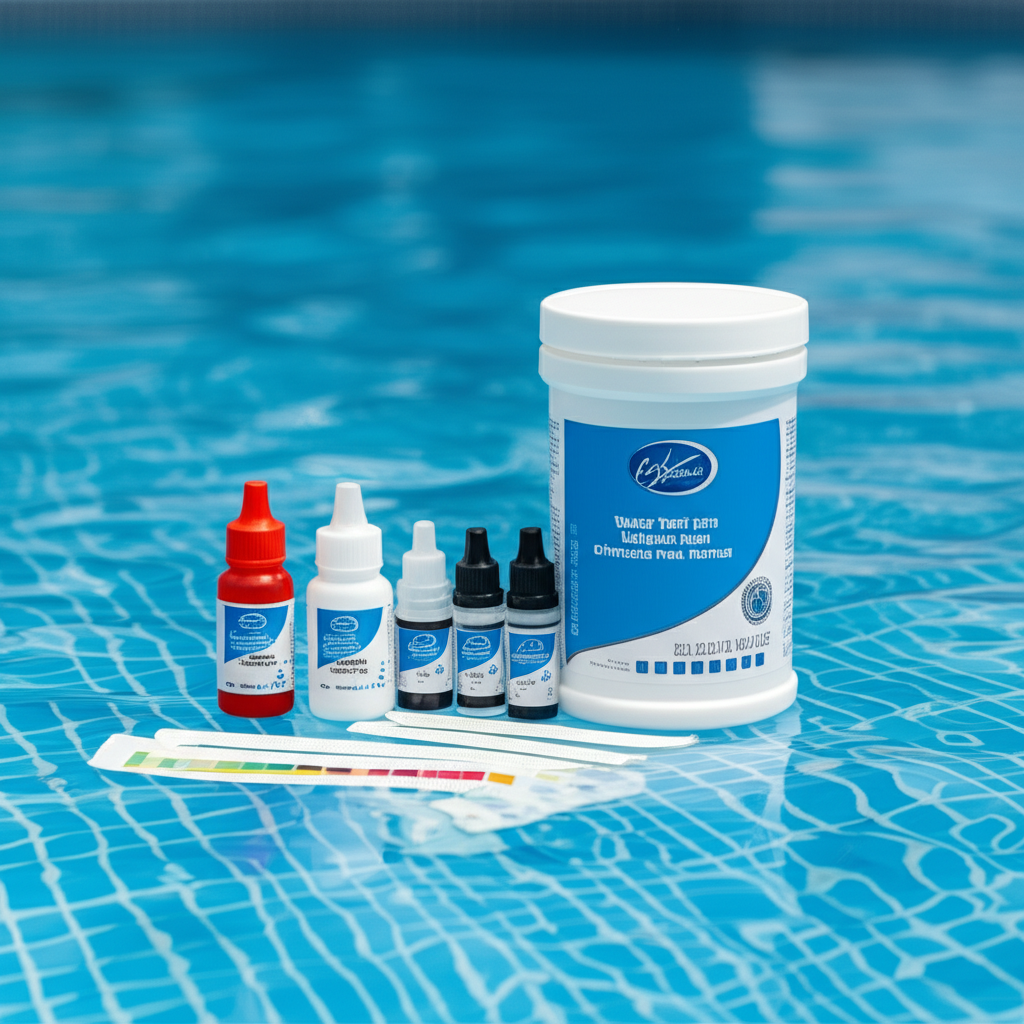
When it comes to Water Test Kits, you’ll generally find two primary options: Test Strips and Liquid Test kits. Each offers distinct advantages, making them suitable for different needs and preferences.
The Simplicity of Pool Test Strips
For those seeking convenience and rapid results, Test Strips are an excellent choice. These small, disposable strips are impregnated with chemical reagents that react when dipped into pool water, changing color to indicate various water parameters. Most strips test for pH, Free Chlorine, Alkalinity, and CYA, with some including Calcium Hardness.
How they work: Simply dip a strip into the pool water for a specified time (usually a few seconds), remove it, and compare the resulting colors to a chart provided on the packaging.
Pros:
Speed: Get results in seconds.
Ease of Use: Extremely user-friendly, requiring no complex procedures.
Affordability: Generally the most budget-friendly option for frequent checks.
Ideal for Regular Monitoring: Perfect for daily or weekly routine checks.
Cons:
Less Precision: While good for quick checks, their color matching can be subjective and less precise than liquid kits.
Shelf Life: Can degrade if stored improperly or past their expiration date.
When to use them: Test strips are perfect for quick, regular checks to ensure your pool remains generally balanced between more thorough tests.
The Precision of Liquid Test Kits
For a more accurate and comprehensive assessment of your pool water, a Liquid Test kit is the preferred method for many pool professionals and dedicated owners. These kits use liquid reagents that are added to water samples in vials, producing more distinct color changes that are easier to match precisely.
How they work: You collect water samples in designated vials, then add specific drops of various liquid reagents. After a brief wait, the resulting color indicates the chemical level, which you compare to a detailed color chart. Some kits also involve titration for alkalinity and hardness measurements, providing even greater accuracy.
Pros:
Superior Accuracy: Provide much more precise readings, which is crucial when troubleshooting specific water chemistry issues.
Comprehensive Testing: Often test for a broader range of parameters, including Free and Total Chlorine, pH, Alkalinity, and sometimes more advanced tests like copper or iron.
Reliability: Less prone to environmental degradation than test strips, offering consistent results over time if stored correctly.
Cons:
More Time-Consuming: The process takes longer due to multiple steps and reagent additions.
Higher Initial Cost: Typically more expensive than test strips.
Chemical Handling: Requires careful handling and storage of chemical reagents.
When to use them: Liquid test kits are invaluable for monthly comprehensive checks, diagnosing persistent water problems, or when precise chemical adjustments are critical. If you ever find your water consistently off despite your best efforts, professional pool maintenance services can provide expert testing and adjustments.
Beyond the Basics: Interpreting and Acting on Results
Regardless of the kit type you choose, understanding the results is key. Each parameter has an ideal range, and anything outside these targets requires action. For instance, if your pH is low, you’d add a pH increaser. If chlorine is low, you’d shock the pool or add more sanitizer. This systematic approach ensures your pool water remains within optimal parameters.
If the world of pool chemistry seems daunting, or if you simply prefer to spend your time enjoying your pool rather than balancing chemicals, consider enlisting the help of professionals. Companies offering pool cleaning services can handle all aspects of water testing, chemical balancing, and general upkeep, ensuring your pool is always swim-ready.
Tips for Accurate Testing & Optimal Pool Health
To get the most accurate readings from your Water Test Kits, follow these best practices:
1. Fresh Samples: Always collect water samples from elbow deep, away from jets or skimmers, to get a representative reading.
2. Clean Equipment: Ensure your test vials and strips are clean and free from contaminants.
3. Follow Instructions: Adhere strictly to the manufacturer’s directions for immersion times, reagent drops, and waiting periods.
4. Test Regularly: Frequency depends on usage, weather, and pool type, but weekly testing is a good baseline.
5. Store Kits Properly: Keep strips and reagents in a cool, dry place, away from direct sunlight, and always ensure containers are sealed.
6. Seek Professional Help: If you consistently struggle to balance your water or face complex issues like stubborn algae or consistent cloudiness, don’t hesitate to contact a professional. Professional pool care providers possess the expertise and advanced tools to diagnose and resolve even the trickiest water chemistry problems.
Conclusion
Whether you opt for the quick convenience of Test Strips or the precise readings of a Liquid Test kit, incorporating regular water testing into your routine is fundamental to effective pool maintenance. These indispensable Water Test Kits empower you to be proactive, ensuring your pool is not only sparkling clean but also healthy and safe for everyone to enjoy. With a little effort and the right tools, you can achieve ultimate pool care and effortlessly maintain your aquatic oasis, year-round. For stress-free upkeep and peace of mind, remember that expert pool services are always available to help make your pool experience truly seamless.